Sustainability Management
Safety Management
SeAH Besteel prioritizes safety and health in all corporate activities. We are committed to continually improving our processes to create a safe and healthy working environment by minimizing serious accidents and industrial accidents that may occur during the production, use, and disposal of special steel, large forgings, and components for nuclear and automotive applications.
We strictly comply with domestic and international requirements, including safety and health laws and international agreements. Furthermore, we establish strict internal management standards to proactively respond to regulations.
We strengthen the safety and health capabilities of executives and employees through continuous education and training. We establish an autonomous safety culture by actively carrying out safety and health activities.
Based on a corporate culture that adheres to basics and principles, all members clearly recognize their roles and responsibilities as principals of safety and health, and strictly observe all regulations, rules, and standards.
We operate a communication system among all personnel to provide safety and health information and listen to feedback. We actively incorporate workers' opinions to improve risks.
We set objectives to achieve "Zero Serious Accidents" and reduce industrial accidents. We faithfully implement action plans for accident prevention, such as the intensive management of high-risk areas and adherence to Safety Ground Rules.
All executives, employees, and workers shall fully understand this Safety and Health Management Policy. We pledge to do our utmost to maintain an optimal safety and health management system through constant participation in activities and active improvement efforts.
Strategic Tasks for Safety and Health Management
Based on safety and health management policies, SeAH Besteel strives for zero serious accidents.
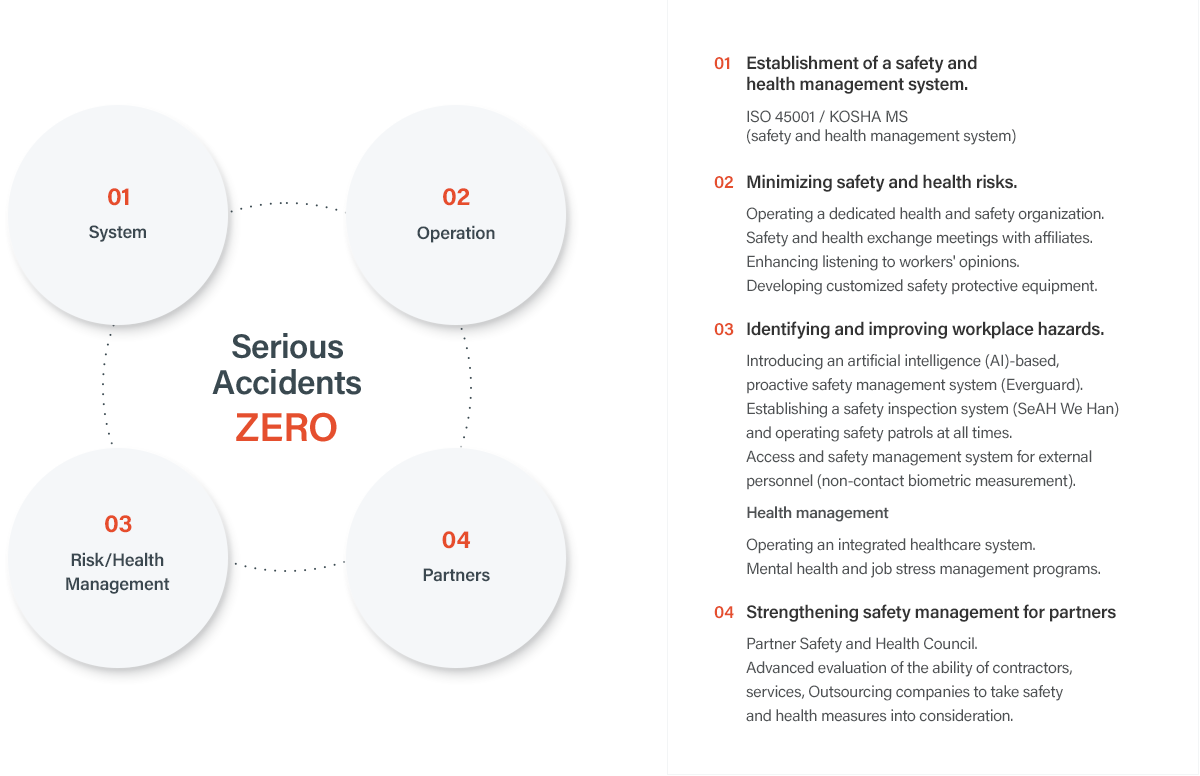
Establishment of a safety and
health management system
The SeAH Besteel Gunsan and Changnyeong plants have obtained ISO 45001, the international standard for safety and health management systems, and KOSHA-MS certification from the Korea Occupational Safety and Health Agency, and are consistently implementing safety management.
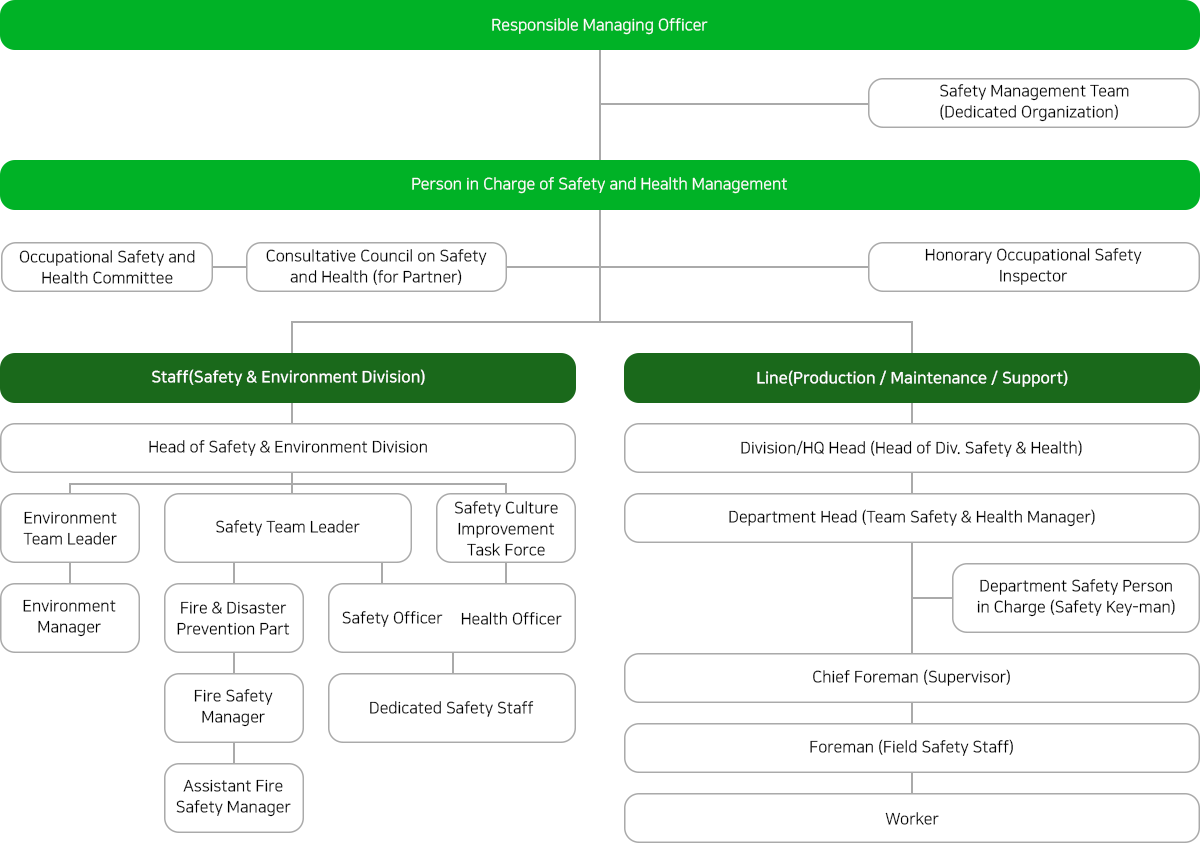
Go to CertificatesSafety and Health Organization
Environmental Management
To take the lead as an eco-friendly company by recognizing the environment as the top priority of company activities and practising environmental management, SeAH Besteel pledges that all executives and employees will practise the following during management activities and business execution
We strive to preserve the global environment and implement a carbon-neutral society by reducing greenhouse gas emissions and minimizing pollution through process improvement and the development of eco-friendly technology.
We promote large-scale change by actively implementing modest actions.
We establish stringent self-management standards for rapidly changing and strengthening environmental laws and complying with those laws and regulations.
We continuously work to increase the rate of resource recycling, develop new technologies to enhance the value of by-products, and reduce the waste generation.
We protect the environment by minimizing pollution and establishing optimal environmental management practices (integrated management).
We communicate with all executives and employees through the SHE Integrated Council, which leads the transition to a pleasant workplace.
Establishment of an Environmental
Management System
SeAH Besteel practises continuous eco-friendly management and environmental improvement based on PDCA (Plan-Do-Check-Act) while obtaining environmental management system (ISO 14001) and energy management system (ISO 50001) certifications.
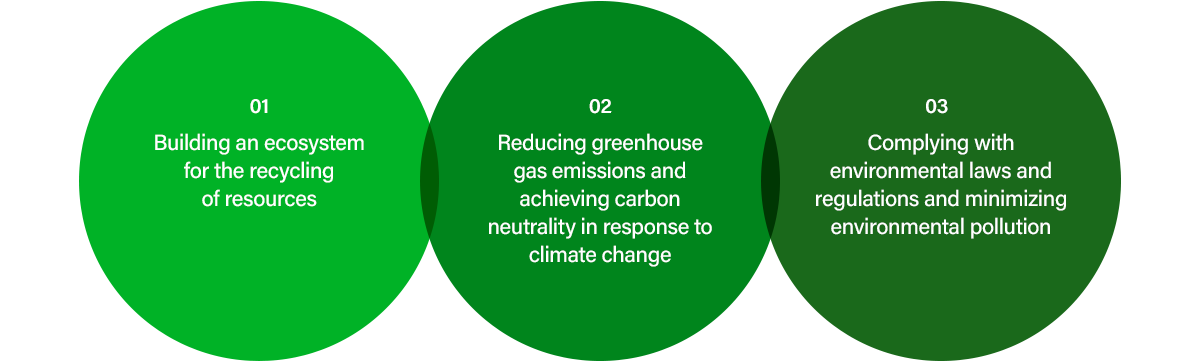
Go to CertificatesEnvironmental Management Strategic Tasks
Responding to Climate Change
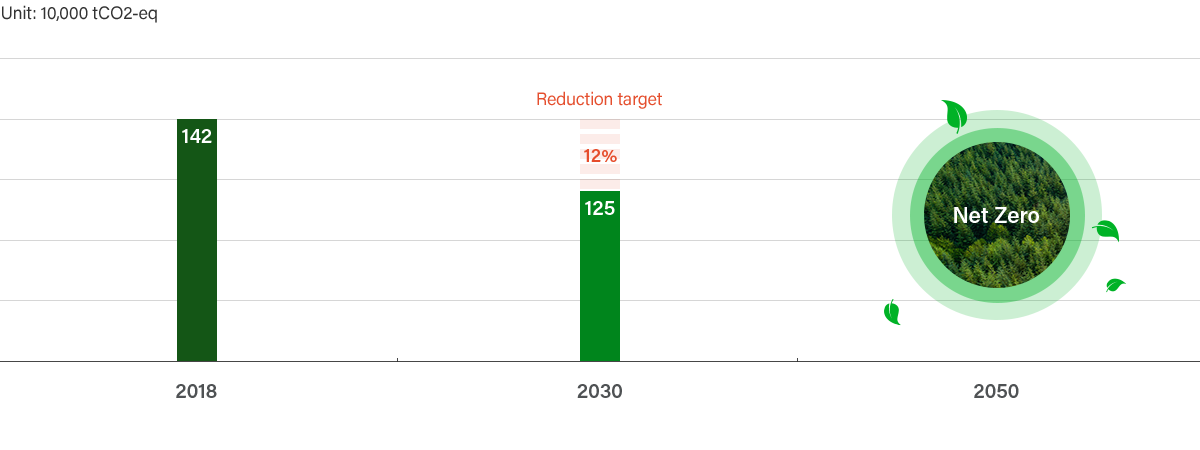
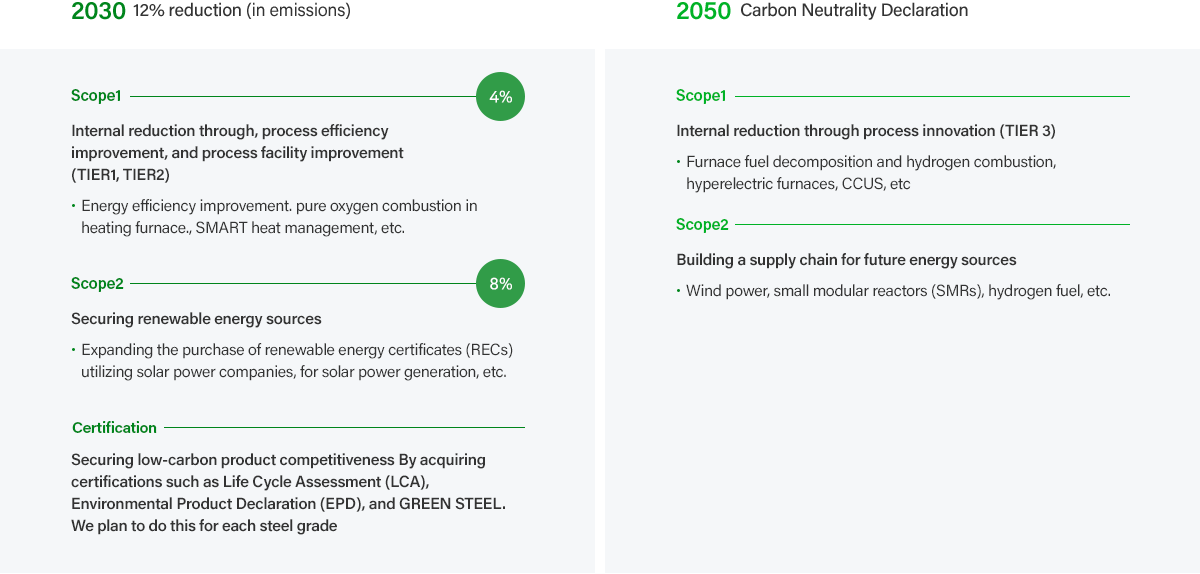
SeAH Besteel is an eco-friendly company that recycles steel scrap as a circulating resource in an electric furnace to produce steel. Furthermore, it is developing a management system to achieve carbon neutrality by 2050, beginning with a goal of reducing 12% of carbon emissions by 2030 through systematic management of carbon emissions, the development of low-carbon products, waste recycling, energy efficiency, the use of new and renewable energy, etc.
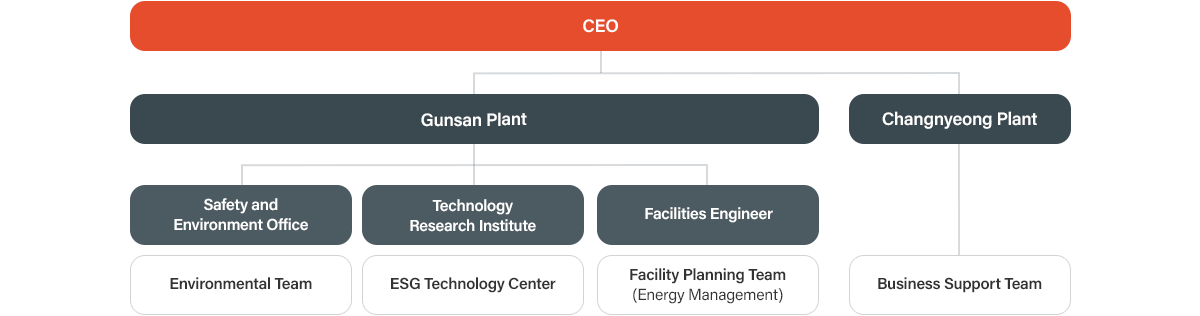
Environmental Management Organization